
Right eye twitching in females is an involuntary, repetitive contraction of the eyelid muscles. Doctors call the common form eyelid myokymia. Stress, tiredness, caffeine and eye strain are the usual triggers, and the twitch normally stops by itself within days.
A flutter in the right eyelid is hard to ignore, especially during a busy workday or after a bad night of sleep. Many women then wonder whether the twitch is a sign of good luck, bad luck or a health problem.
This guide answers all three. It explains what the medical evidence says, what tradition says, and how to tell an ordinary twitch from one that needs a doctor.
What is Right Eye Twitching in Females?
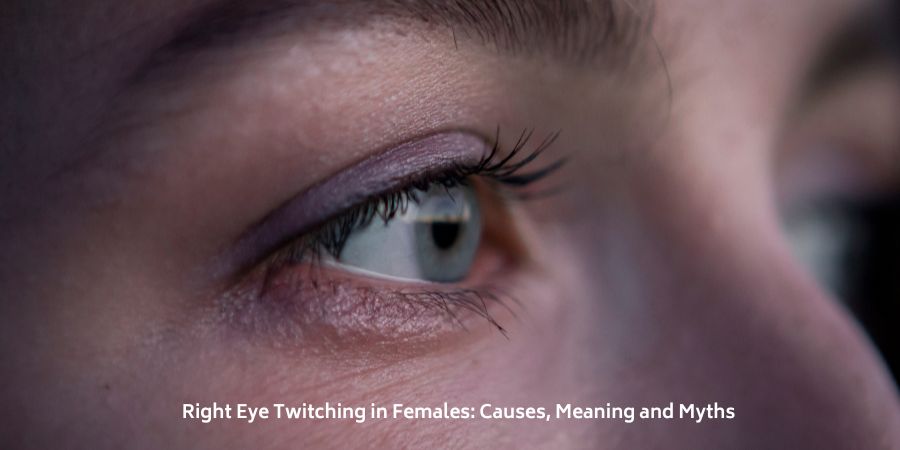
Right eye twitching is a small, uncontrolled movement in the muscles of the right upper or lower eyelid. The movement is usually fine enough that other people cannot see it. The person feeling it often notices it far more than anyone else does.
The cause does not depend on sex or on which eye is affected. The same muscles and the same triggers apply to women and men, and to the left eye as much as the right. The phrase “in females” reflects what people search for, not a different medical condition.
Is Right Eye Twitching in Females Good or Bad?
Medically, right eye twitching is usually harmless. A typical episode affects a small part of one eyelid, lasts seconds or minutes, and may return on and off for several days.
What matters is the pattern of symptoms, how long they last and what triggered them. The side of the face has no bearing.
| Pattern | What it usually suggests |
| Occasional flutter with no pain or vision change | Usually harmless |
| Twitching during stress, short sleep, long screen hours or heavy caffeine intake | Lifestyle trigger |
| Persistent twitching, forceful eyelid closure, drooping or spread to other facial muscles | Worth a medical check |
The American Academy of Ophthalmology lists stress, fatigue, excess caffeine and dry eyes among the common contributors to eyelid twitching.
So, the question of whether right eye twitching in females is good or bad has a plain medical answer. An isolated twitch is not a warning and not a blessing. It is a muscle reacting to something in your routine.
What Does Right Eye Twitching Mean or Females According to Tradition?
In folklore, right eye twitching meaning for female readers depends on the region, the family and the person telling the story. Traditions do not agree with one another. Some communities read a right eye twitch as good news for women. Others read it the opposite way, and several assign opposite meanings to men and women.
That disagreement is itself informative. If one belief says right means fortune and another says right means misfortune, neither can be a reliable prediction.
Common traditional readings include:
- Good fortune: news or a development that works in your favour.
- Opportunity: a change in work, relationships or money.
- An approaching event: a sense that something is about to happen.
The right eye twitching superstition has real cultural value. It gives people a story to hold when something unexplained happens in their body. Still, no study has shown that an eyelid twitch predicts luck, money, pregnancy or trouble.
The sensation is real. The prediction attached to it is a matter of belief. My own advice is to enjoy the folklore if it comforts you, but to check your sleep and caffeine intake before you plan around it.
What Causes Right Eye Twitching in Females?
The medical term for the common eyelid twitch is eyelid myokymia. It involves small, involuntary contractions of the muscles around the eyelid. It usually affects one eye at a time and often clears without treatment, according to the Cleveland Clinic.
Common right eye twitching causes are listed below.
Stress and Anxiety:
Eye twitching due to stress is one of the most frequently reported patterns. Demanding work weeks, family pressure and emotionally difficult periods can all make an eyelid twitch more noticeable.
Stress rarely acts alone. It often arrives with poor sleep and extra coffee, and the combination makes the twitch more likely.
Lack of Sleep:
Yes. Lack of sleep and eye twitching often appear together. Too little rest can make muscles more excitable and can make a mild twitch easier to feel.
Women with long working hours, night shifts or broken sleep often see the pattern first. A fixed bedtime is the simplest first step.
Too Much Caffeine:
It can. Coffee, tea, energy drinks and other caffeinated products may contribute, particularly in large amounts. Caffeine and eye twitching are linked often enough that cutting back is a standard first suggestion.
Reduce intake gradually and watch whether the twitch eases. Nicotine is also associated with eyelid twitching, according to the Mayo Clinic.
Eye Strain & Dry Eyes:
Yes. Long hours on a screen, extended reading, and dry or windy conditions can irritate the eye. Eye strain symptoms such as burning, tired eyes and blurred focus often come before the twitch.
Regular screen breaks, normal blinking and advice about persistent dryness all help.
Medication & Underlying Conditions:
Some medicines can contribute to eyelid twitching. Less commonly, long-lasting spasms point to conditions such as blepharospasm or hemifacial spasm.
Do not stop a prescribed medicine by yourself. If the twitching began after a change in medication, speak with your doctor or pharmacist.
How is a Harmless Twitch Different from a Spasm Disorder?
| Feature | Eyelid myokymia | Blepharospasm | Hemifacial spasm |
| Typical pattern | Small flutter in one eyelid | Repeated, forceful blinking or eyelid closure | Twitching on one side of the face |
| Usually affects | One eye | Both eyes | One side of the face, often starting near the eye |
| Course | Comes and goes, often clears alone | Tends to persist or worsen | Tends to persist |
| Usual action | Adjust sleep, caffeine, screen habits | Medical assessment | Medical assessment |
Why is My Right Eye Twitching? What You Can Do
If you are asking “why is my right eye twitching?”, start with the past week. Review your sleep, stress, caffeine and screen time.
For a mild, isolated twitch, these steps may help:
- Prioritise sleep: keep a regular sleep schedule.
- Reduce caffeine: cut back on coffee, tea and energy drinks.
- Manage stress: take breaks, walk daily or practise relaxation techniques.
- Reduce eye strain: step away from screens often and adjust the lighting at your desk.
- Address dry eyes: ask a pharmacist or eye-care professional about suitable options.
- Track the pattern: write down when the twitch starts, how long it lasts and what came before it.
Most ordinary eyelid twitches improve without specific treatment, according to the NHS. These steps may help, but a lasting twitch should not be put down to stress or tiredness without a proper check.
A Simple Twitch Log:
Tracking is the most useful step for most readers, and it gives your doctor something concrete to work with.
| Date | Duration | Hours slept | Caffeine drinks | Screen hours | Stress level (1–5) |
After one to two weeks, patterns usually show up. A twitch that appears on short-sleep days is a different story from one that appears every day regardless.
When Should You See a Doctor for Eye Twitching?
Most cases are harmless, but some symptoms need attention.
Book an appointment with an eye-care professional or doctor if:
- The twitching lasts longer than two weeks or does not improve.
- The eyelid closes completely during a spasm.
- You have difficulty opening the eye.
- The twitching spreads to other parts of the face or body.
- The eyelid begins to droop.
- You have redness, swelling, discharge or lasting discomfort.
- The affected area feels weak or stiff.
Seek urgent medical help if you have sudden vision changes, sudden facial weakness or other new neurological symptoms.
These signs do not necessarily mean something serious. They do mean the twitch should not be dismissed as ordinary, according to the Mayo Clinic.
Frequently Asked Questions
Does right eye twitching in females mean good luck?
Some cultural traditions treat it as a sign of good fortune for women. Others read it differently. No scientific evidence shows that eyelid movements predict luck or future events.
Is right eye twitching a sign of pregnancy?
No. Right eye twitching is not an established sign of pregnancy. If pregnancy is possible, take a pregnancy test instead of relying on an eyelid movement.
Can stress cause right eyelid twitching in women?
Yes. Stress is a recognised trigger. Tiredness, caffeine and eye irritation can add to it.
How long does right eye twitching usually last?
A typical episode lasts seconds or minutes and may return over several days. Some last longer. A twitch that continues or interferes with vision needs medical assessment.
Is right eye twitching different from left eye twitching?
The common medical causes are the same for either eye. The side does not decide whether the symptom is good or bad, and it does not fix a cultural meaning.
Conclusion
Right eye twitching in females is usually a temporary muscle spasm linked to everyday factors such as stress, tiredness, caffeine or eye irritation. Cultural beliefs attach meanings to the right eye, but medicine does not support them as predictions.
Pay attention to your sleep, stress, screen habits and any other symptoms. If the twitch lasts, spreads or affects your vision, get professional advice.
Author’s Note:
I have always found it interesting how a small, unexplained bodily sensation can make us search for answers. An eye twitch, for instance, might last only a few seconds, yet it can leave us wondering whether it means something, especially when we have grown up hearing different interpretations of the right and left eye.
What stands out to me is how quickly we sometimes look for meaning before considering what our bodies might be telling us. Stress, inadequate sleep and long hours in front of a screen can affect our well-being in ways we do not always notice until a symptom appears. For women balancing professional responsibilities, family expectations and personal commitments, taking a moment to acknowledge exhaustion can be more useful than worrying about an omen.
I do not believe an eye twitch should determine how we feel about the day ahead. Cultural traditions can be meaningful, and there is nothing wrong with being curious about them. However, I believe we should distinguish between what our traditions tell us and what medical evidence can establish.
My takeaway is simple: listen to your body without becoming frightened by every unfamiliar sensation. Sometimes, the most sensible response is to rest, reassess your routine and seek medical advice when a symptom persists. Our health deserves more attention than superstition does.