
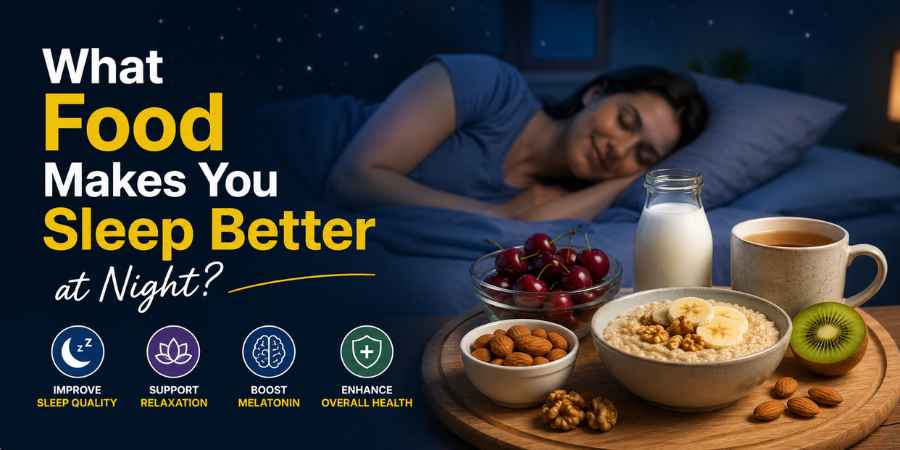
There is no single food proven to make everyone sleep better. However, foods such as kiwi, tart cherries, yogurt, milk, nuts, oats, whole grains and fatty fish can fit into a diet associated with healthier sleep. The strongest evidence is for an overall healthy eating pattern rather than one “sleep-inducing” food.
A 2025 meta-analysis combined with a systematic review analyzed 62 studies and more than 328,000 persons and observed that individuals having better sleep habits are also likely to follow a Mediterranean diet pattern. Sleeping well was tied to eating as the Mediterranean dietary pattern, as evidenced by the findings of sleep quality and diet-related studies. Individuals with high-quality sleep reported 38% greater likelihood of being in the high Mediterranean-score group compared to those with sleep problems (OR 1.38, 95% CI 1.10, 1.73). Since the bulk of the data was from observational studies, they could not demonstrate that the diet caused sleeping better.
For an evening snack, a small serving of kiwi with plain yogurt, oats with milk, or a few nuts with fruit is a more evidence-informed choice than relying on sugary desserts, alcohol or large late-night meals.
Which foods may help you sleep better?
Kiwi, tart cherries, dairy foods, nuts, oats, whole grains and fatty fish are among the better choices to include in a sleep-friendly diet.
Their potential benefits come from different nutrients and dietary characteristics:
- Kiwi: studied directly for possible improvements in sleep.
- Tart cherries: naturally contain melatonin and have been investigated in several small clinical studies.
- Milk and yogurt: provide protein, calcium and tryptophan.
- Almonds and other nuts: provide magnesium, healthy fats and protein.
- Oats and whole grains: provide complex carbohydrates and fiber.
- Fatty fish: provides omega-3 fatty acids and other nutrients associated with healthy dietary patterns.
The evidence is not equally strong for every food. None should be described as a guaranteed treatment for insomnia.
Is kiwi one of the best fruits for sleep?
Kiwi is one of the fruits that has been directly studied for sleep, but the evidence is still limited.
A commonly cited clinical study examined 24 adults with sleep problems who ate two kiwifruits one hour before bedtime for four weeks. The researchers reported improvements in sleep onset, total sleep time and sleep efficiency.
That finding is interesting, but it came from a small study, so it should not be interpreted as proof that kiwi treats insomnia.
Kiwi is nevertheless a sensible evening food because it provides fiber, vitamin C and other nutrients without being a heavy late-night meal.
Can tart cherries help you sleep?
Tart cherries may help some aspects of sleep, but current evidence is not strong enough to call them a proven sleep treatment.
Tart cherries naturally contain melatonin, a hormone involved in regulating the sleep-wake cycle.
In a randomized, double-blind, placebo-controlled crossover study involving 20 healthy adults, participants consumed tart cherry juice concentrate or placebo for seven days. Researchers measured urinary melatonin and sleep-related outcomes.
More recent data still shows mixed results. For a 2025 systematic review, they came across seven interventional studies and discovered that three reported improvements in sleep parameters, and three reported increases in melatonin levels. Also, the researchers noted that doses, study durations and participant characteristics were quite different among the studies that prevented the drawing of definitive conclusions.
So tart cherry juice is promising, but it is not a substitute for evidence-based treatment of chronic insomnia.
Does milk help you sleep?
Milk can be a reasonable light snack before bed, but evidence does not show that drinking milk guarantees better sleep.
Milk contains tryptophan, an amino acid involved in pathways that produce serotonin and melatonin. It also provides protein and calcium.
The familiar glass of warm milk may therefore be a comfortable part of a bedtime routine, particularly if hunger is keeping you awake.
However, the temperature of the milk is unlikely to be the main issue. If dairy causes bloating, reflux or other digestive symptoms, it may make sleep worse rather than better.
Are almonds good before bed?
Almonds are a nutritious evening snack because they provide magnesium, protein and unsaturated fats.
Magnesium is involved in normal nerve and muscle function, but that does not mean eating almonds immediately before bed will reliably make you sleepy.
A small handful is more appropriate than a large serving because nuts are energy-dense.
Pairing a modest number of almonds with fruit or plain yogurt can make a balanced snack if you are genuinely hungry at night.
Can bananas help with sleep?
Bananas can be part of a healthy evening snack, but there is not enough evidence to call bananas a proven sleep aid.
They provide carbohydrates, potassium, magnesium and vitamin B6.
A banana can also be paired easily with other foods, such as plain yogurt or a small amount of nut butter.
The bigger benefit comes from choosing a balanced snack instead of a highly processed, high-sugar food.
Is oatmeal good before bed?
A small serving of oatmeal can be a good evening meal or snack because oats provide whole-grain carbohydrates and fiber.
Oats fit naturally into the Mediterranean-style eating pattern that has been associated with better sleep in observational research.
Try oats with milk or plain yogurt and a small amount of fruit or nuts.
The key is portion size. A large bowl immediately before lying down can be uncomfortable and works against the goal of getting to sleep comfortably.
Does yogurt help you sleep?
Plain yogurt can be a practical bedtime snack because it provides protein and can be combined with fruit or nuts.
For example, yogurt with kiwi provides a light combination of protein, carbohydrates and fiber.
There is not enough evidence to say that yogurt itself improves sleep in people with insomnia. Its value is primarily as part of a balanced diet.
What should you eat for dinner if you want better sleep?
Choose a moderate, balanced dinner rather than a very large or heavily processed meal.
A practical plate could include:
- Protein: fish, chicken, eggs, beans or lentils
- Whole-grain or starchy food: oats, brown rice, whole-grain bread or potatoes
- Vegetables: leafy greens, broccoli, carrots or other vegetables
- Healthy fat: olive oil, nuts or seeds
This approach resembles the Mediterranean dietary pattern that has been associated with better sleep outcomes.
The goal is not to create a special “sleep dinner.” It is to avoid the combination of excessive portions, highly processed foods and eating too close to bedtime.
What foods should you avoid before bed?
Avoid or limit caffeine, alcohol and large meals close to bedtime, particularly if you notice that they disrupt your sleep.
The National Heart, Lung, and Blood Institute recommends avoiding caffeine, nicotine and alcohol close to bedtime and avoiding heavy or large meals within a few hours of going to sleep.
Caffeine
Caffeine is especially important because its effects can last for hours.
A 2023 systematic review and meta-analysis of 24 studies found that caffeine reduced total sleep time by an average of 45 minutes, reduced sleep efficiency by 7%, increased the time needed to fall asleep by about 9 minutes and increased wakefulness after sleep onset by about 12 minutes.
The researchers estimated that a 250 mL coffee containing about 107 mg of caffeine should be consumed at least 8.8 hours before bedtime to avoid reducing total sleep time.
Individual sensitivity varies, so some people may need an even longer gap.
Alcohol
Alcohol can make you feel sleepy initially, but that does not mean it produces good-quality sleep.
The NIH notes that alcohol can make it easier to fall asleep while also making sleep lighter and increasing the likelihood of waking during the night.
Large late-night meals
A heavy meal close to bedtime can cause fullness, reflux or discomfort.
The NIH recommends avoiding heavy or large meals within a few hours of bedtime while noting that a light snack can be appropriate.
Does the Mediterranean diet improve sleep?
The Mediterranean diet is associated with better sleep quality, but researchers have not established that it directly causes better sleep.
The strongest recent evidence comes from a 2025 systematic review and meta-analysis of 62 studies involving 328,493 participants.
The analysis found:
- 38% higher odds of good-quality sleep among people with higher Mediterranean-diet adherence.
- 39% higher odds of sufficient sleep duration.
- 74% higher odds of an earlier chronotype.
The researchers emphasized that the included studies were observational and that more longitudinal research and clinical trials are needed to establish causality.
That distinction is important for health content. An association does not mean that eating Mediterranean-style food will cure insomnia.
What is the best food to eat right before bed?
There is no scientifically established “best” food for everyone.
If you are hungry, keep the snack small and easy to digest.
Good options include:
- Plain yogurt with kiwi
- A banana with a small amount of nut butter
- A small bowl of oats with milk
- A few almonds with fruit
- Whole-grain toast with a small amount of nut butter
If you are not hungry, you do not need to eat simply because a particular food is promoted as a sleep aid.
How long before bed should you stop eating?
There is no universal cut-off that works for everyone, but avoiding large meals within a few hours of bedtime is a reasonable starting point.
The NIH recommends avoiding heavy or large meals close to bedtime and maintaining regular meal times.
People with reflux may need to be particularly careful about late meals.
If you need a snack, a small portion is generally more appropriate than another full meal.
Can food cure insomnia?
No. Food alone should not be considered a treatment for chronic insomnia.
Diet can support healthy sleep, but persistent insomnia may have many causes, including stress, medications, irregular sleep schedules, mental health conditions and other sleep disorders.
For chronic insomnia, cognitive behavioral therapy for insomnia (CBT-I) remains the most strongly recommended treatment, according to the National Center for Complementary and Integrative Health.
If sleep problems continue despite changes to diet and sleep habits, medical evaluation is appropriate.
What is the simplest diet for better sleep?
Build most meals around minimally processed foods rather than searching for one special sleep food.
A practical pattern looks like this:
- More often: Vegetables, fruits, whole grains, beans, lentils, nuts, seeds, fish and other minimally processed foods.
- Less often: Highly processed foods, excessive added sugar, very heavy meals and alcohol close to bedtime.
This approach is consistent with the dietary pattern that has the strongest observational evidence for sleep: the Mediterranean diet.
Conclusion
If you want food that may support better sleep, start with the overall diet rather than a single ingredient.
Kiwi and tart cherries have been studied directly, but the evidence remains limited. Yogurt, milk, nuts, oats, fruit and whole grains can make sensible evening choices, particularly when you are hungry.
The bigger evidence base points toward dietary quality. A 2025 analysis of more than 328,000 people across 62 studies found that better sleep was associated with greater adherence to a Mediterranean-style diet, although the researchers could not establish cause and effect.
And if sleep is the goal, what you avoid can matter just as much. Caffeine can reduce sleep duration and efficiency, while alcohol and large late-night meals can interfere with normal sleep.
Food can support sleep. It cannot replace it, and it cannot replace proper treatment when a sleep disorder is the real problem.
Frequently Asked Questions
What food makes you sleepy fast?
No food has been proven to make everyone fall asleep quickly. Kiwi, tart cherries and small servings of carbohydrate- and protein-containing foods may support sleep, but the evidence varies.
What is the best fruit for sleep?
Kiwi and tart cherries have some of the most direct research behind them. However, neither has been established as a treatment for insomnia.
What should I eat if I am hungry at night?
Choose a small, easy-to-digest snack, such as yogurt with kiwi, a banana with a few almonds, or a small serving of oats with milk.
Does eating before bed make you sleep better?
Not necessarily. A light snack can help if hunger is keeping you awake, but large meals close to bedtime can interfere with sleep.
Does milk really help you sleep?
Milk contains nutrients involved in sleep-related pathways, but there is not strong evidence that milk itself reliably improves sleep. It can still be a reasonable light bedtime snack.
Does tart cherry juice contain melatonin?
Yes. Tart cherries naturally contain melatonin, and clinical studies have investigated whether this may influence sleep. However, evidence remains limited and inconsistent.
How much caffeine should I have before bed?
If you want to minimize caffeine’s effect on sleep, avoid it well before bedtime. A 2023 meta-analysis estimated that a 250 mL coffee containing about 107 mg caffeine should be consumed at least 8.8 hours before bed to avoid reducing total sleep time. Individual responses vary.
Is the Mediterranean diet good for sleep?
Research suggests an association between greater adherence to the Mediterranean diet and better sleep. A 2025 meta-analysis of 62 studies involving 328,493 people found higher odds of good-quality sleep among people with greater adherence, but the evidence does not prove that the diet itself causes better sleep.