
Healthcare is entering a major transition. For decades, medicine has largely focused on diagnosing and treating disease after symptoms appear. Today, advances in genomics, biomarker science, artificial intelligence, and digital health are steadily reshaping that model toward preventive, data-driven, and highly personalized care. The future of healthcare is increasingly being defined by the ability to understand human biology at an individual level and translate that understanding into practical, everyday health decisions.
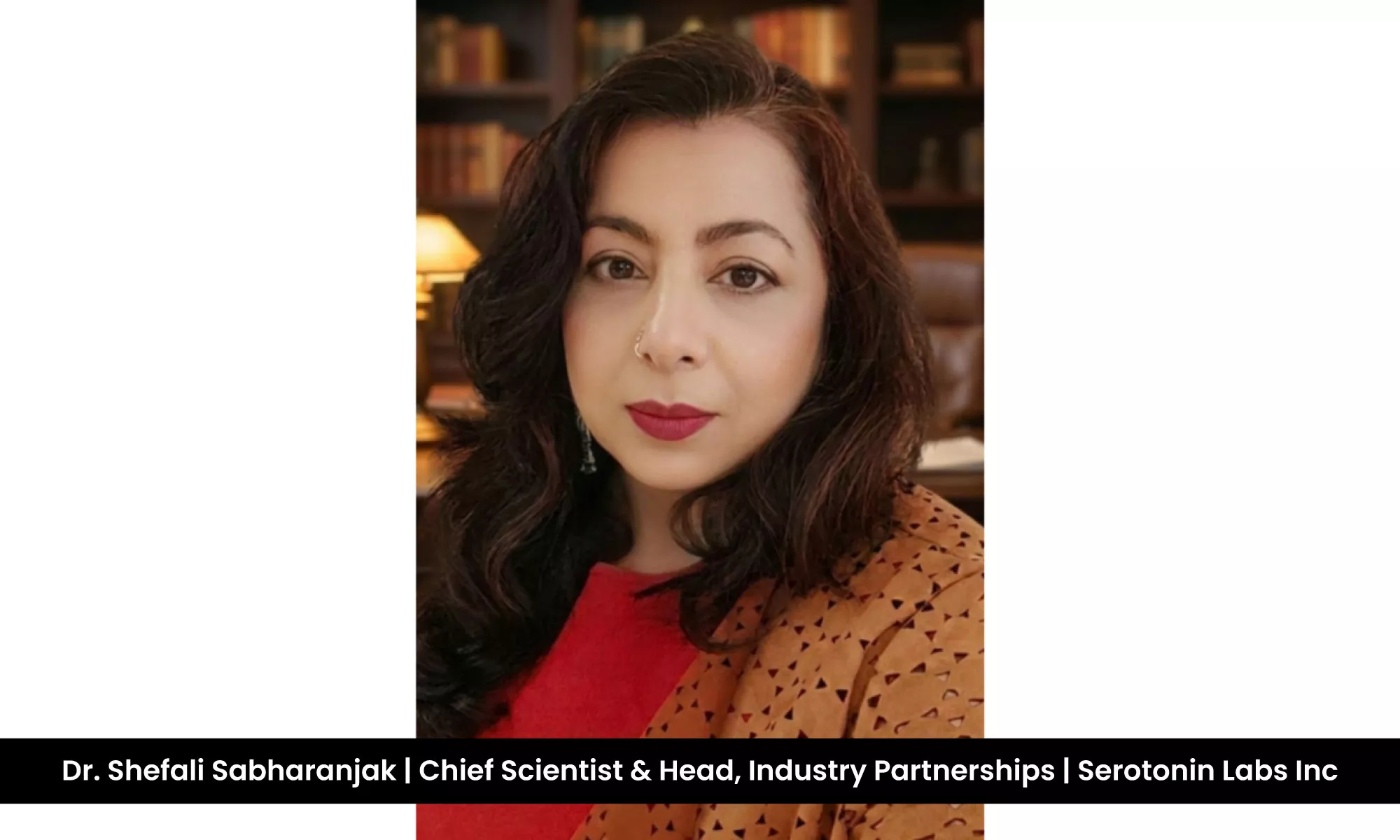
Dr. Shefali Sabharanjak is contributing to this shift through her work at Serotonin Labs Inc and the India Rising Foundation. Her perspective spans genomics-driven wellness, translational science, preventive healthcare ecosystems, ethical data use, and India’s growing role in biotechnology and research-led innovation. Rather than viewing healthcare as a system built only around treatment, she advocates for a future where preventive intelligence and personalized care work alongside curative medicine to improve long-term health outcomes.
We had the privilege of discussing these ideas with Dr. Shefali Sabharanjak. Below are the highlights from the interview.
As Chief Scientist at Serotonin Labs Inc, how are you integrating genomics, personalized nutrition, and digital health to redefine preventive healthcare in the era of Medicine 3.0?
We have created a knowledge network that integrates multiple health-related inputs- genomics, scientific evidence, personal metrics, dietary habits, blood biomarkers, allergies, personal health goals to name a few- to define a person’s nutritional needs. This high degree of personalization enables us to apply population-derived nutritional insights to every person’s health and set them on a course- correction from sliding towards disease to actually changing direction towards peak health. This knowledge network is the first-of-its-kind system in the world that drives out precision algorithms.
Project Serotonin focuses heavily on hyperpersonalized wellness solutions. What scientific and technological breakthroughs have been most critical in making personalization scalable and evidence-backed?
Consumerisation of genomic testing has been a huge scientific breakthrough in creating personalised wellness solutions. In terms of technical breakthroughs, AI-assisted analytics will be the next turning point. However, the logic of AI-assisted analytics will need careful calibration from research-derived knowledge.
How do you ensure that innovation remains scientifically rigorous while also being accessible to everyday consumers?
This is indeed a big challenge that our team takes very seriously. Our knowledge framework is designed for unbiased evaluation of every scientific paper that is relevant for our work. We are not swayed by research groups, influencers or science evangelists. We take all published data, examine it and our algorithms make the right decisions based on other relevant criteria. We also ensure that this scientific knowledge is than translated into actionable, consumer-friendly guidance that is easy to follow. We have crated behavioural adaptation tools that are delivered via an App to our program members.
India is rapidly emerging as a biotechnology and digital health powerhouse. What unique strengths do you believe India possesses in becoming a global leader in bio-innovation and personalized medicine?
India is known to leapfrog milestones in technology evolution- the transition from paper-based banking to mobile-assisted financial transactions is a brilliant illustration. People who did not have a bank account until 2014, suddenly crossed over to using mobile banking apps, and UPI-led payments like it was child’s play. They skipped the paper-based banking stage entirely. Similarly, India is poised uniquely to leapfrog from a Purely Curative Health Interventions model to a Daily Preventive + Situationally Curative Health Interventions model in the next 5 years. We have excellent genomics labs, and our blood biomarker testing market is expanding with companies adopting novel biomarker detection techniques. Indian consumers have always been comfortable with multiple streams of health management practices. We have had co-existence of Ayurveda, Allopathy, and ethnobotanical medicine in our society. Consumer awareness is growing at a rapid pace, and people are open to new solutions. All these factors can make India a global leader in bio-innovation and personalized medicine.
Through your role as Permanent Trustee at India Rising Foundation, you are contributing to the vision of positioning India as the world’s R&D capital by 2047. What systemic changes are most urgently needed to unlock India’s scientific and innovation potential?
We need more research ecosystems to bring out the best of ideas from our graduate and undergraduate pool of students, and from people with no formal education as well. At India Rising Foundation, we aim to create spaces for people to come and test ideas using research frameworks and labs without the pressure of having their entire career depend upon the success or failure of that one idea. We want to promote creative thinking, revival of old Indian knowledge, and creation of solutions that solve problems. Fundamental research that is promoted by India’s eminent, august institutions is definitely important. We also want to create an ecosystem for rapid testing and identification of good ideas that come from people who do not have access to such institutions.
Personalized wellness often requires analysing highly sensitive biological and lifestyle data. How do you approach ethical concerns surrounding privacy, consent, and responsible use of health data?
Data privacy and user consent are non-negotiable when you analyse consumer health
data. There are many guidelines that are easily translated into practical steps to ensure this.
In your experience, how important is interdisciplinary collaboration between biotechnology, AI, nutrition science, and digital health in shaping the future of healthcare innovation?
Project Serotonin -www.projectserotnin.com- is an embodiment of interdisciplinary co-operation between individuals who bring in diverse knowledge and tech expertise. Disruptive innovations cannot be made by teams that have members with the same domain expertise. We are able to create an entire platform and ecosystem of preventive wellness protocols precisely because we are a group of people who bring in a diverse set of expertise and experience.
Many startups focus on treatment, whereas your work emphasizes prevention and long-term wellness optimization. Do you believe the global healthcare industry is finally shifting from reactive medicine to preventive care?
My personal take is that the global medicine industry will accommodate preventive health and wellness optimisation as a co-pilot to curative healthcare. The two are not necessarily antagonistic to expect a complete abandonment of curative care along with the adoption of preventive health.
Situational interventions – trauma, planned pregnancy and childbirth, cancer-and non-cancer related surgeries- all these scenarios are where the traditional healthcare model delivered by clinics and hospitals is always going to be relevant and necessary. Preventive wellness platforms such as Project Serotonin should be adopted by hospitals & physicians because these platforms provide a window into a patient’s life outside the hospital and the 30-minute consultation window. The data can be analysed to choose the right curative intervention for a patient too, using multiple personalisation parameters. In fact, the resultant joint oversight of monitoring community health by scientists and physicians will lead to significant strides in managing public health, in addition to delivering personalized healthcare.
Building algorithms for personalized wellness requires balancing scientific complexity with user simplicity. What have been some of the biggest challenges in translating deep scientific research into consumer-friendly health solutions?
Translational science has to walk that fine line between data-derived accuracy and the need for simplification of that knowledge into actionable messages and day-to-day tools. The availability of tech solutions has been very valuable in this journey. Written communication is open to multiple interpretations. However, the combination of visual messaging and actionability that an App can offer can help to eliminate this ambiguity. Eg, in the project Serotonin App, we have a time wheel for recording daily (Time-Restricted Eating) fasting and periodic Autophagy-Inducing (18-24 hour) fasting. Once you start using this tool, the difference between both practices is easily understood and it becomes very easy for a person to record a daily fast versus an incidental fast. Building algorithms to create a decision tree for the right solution is the first step in translational science. Displaying those decisions using tech-based visual tools in the App, conveys the right message and leads to accurate behavioural changes.
Scientists must also make it a practice to communicate their science to a larger audience, instead of restricting their communication to only scientific papers and community discourse.
As someone leading cutting-edge research initiatives, how do you foster a culture of innovation and scientific curiosity within your teams and research environments?
At Project Serotonin, our scientists lead the research on various protocols and knowledge distillation systems. We foster an atmosphere of collaboration as well as curiosity within the team. The net result is fast cycles of research and data analyses to improve the program that we have created. We have intentionally built a team that brings in a diverse set of scientific talent, prior experience and perspectives in nutritional biochemistry. Co-development of a tech platform and an App with a team of brilliant engineers has enabled scientists to understand and appreciate the process of delivering the right message and cues to a user. Interaction with the broad spectrum of talent in a team is a highly rewarding experience.
Looking ahead, what is your long-term vision for the future of personalized healthcare, and what legacy would you like your work at Project Serotonin and India Rising Foundation to leave behind?
The future of health management IS personalised and preventive health management!! This approach will remove barriers that prevent access to the right care, to the right person. Health management will also be a consumer-guided
Curative care will also be aligned with the principles of personalisation and N=1 care delivery model.
The rapid development of health monitoring devices and advanced diagnostics is going to add new data inputs into health assessments and root cause analysis of health problems. These are going to be very exciting times for Project Serotonin and the longevity industry.
New techniques like DNA-editing-based curation, stem cell-aided therapeutics- these are the milestones
India Rising Foundation (a not-for-profit trust) is taking baby steps towards creating an open, collaborative, fail-fast research ecosystem to identify ideas, create POCs and help innovators transform their ideas into products. This organisation is just 0.5 years old, but we have a team of people who bring >30 years’ professional experience from many fields. We want to support a network of laboratories, funded by donor contributions, that are open to people with and without formal training to come and try out various ideas. IRF also aims to promote revival of India’s lost or endangered arts, knowledge and cultural practices.