

Image Source: ChatGPT
Cortisol is a steroid hormone made by the adrenal glands that helps the body respond to stress, regulate blood sugar and wake up in the morning. Lowering cortisol does not mean pushing it to zero. The goal is a healthy daily rhythm, with a high level early in the morning and a low level near midnight. The methods with the best evidence are stress management, regular moderate exercise and consistent sleep. Supplements have weaker support.
What is a Normal Cortisol Level?
In most people, cortisol is highest soon after waking and lowest around midnight. A typical morning blood reading falls between about 6 and 23 mcg/dL, though the range depends on the lab and the type of test. Night-shift workers who sleep during the day may show a reversed pattern.
Several ordinary conditions raise cortisol without signaling disease. These include physical trauma, the last three months of pregnancy, intense athletic training, depression, heavy alcohol use, malnutrition and panic disorder.
What Counts as High Cortisol?
Doctors separate two situations. The first is the short rise that follows stress, which is normal and useful. The second is Cushing syndrome, in which cortisol stays high around the clock for months or years.
The warning signs of Cushing syndrome are a rounded face, a fat pad between the shoulders, wide purple stretch marks, easy bruising, muscle weakness, high blood pressure and high blood sugar, often with rapid weight gain around the middle.
Two details are easy to miss. First, a single high morning reading does not diagnose anything, because morning is when cortisol is supposed to peak. Clinicians pay closer attention to a midnight level that fails to fall. Second, fatigue, poor sleep, irritability and belly weight are common in many conditions, so they do not prove that cortisol is high.
How Can You Lower Cortisol Naturally?
Does stress management work?
Yes, and it has the best overall support. A meta-analysis of randomized trials in non-patient adults found that stress management interventions changed cortisol levels, with mindfulness and relaxation methods working best. An earlier meta-analysis of mindfulness programs found a modest effect on salivary cortisol, but it covered only five trials with 190 participants, so the evidence base is small.
Practical options include a structured mindfulness course, slow diaphragmatic breathing, and regular contact with people who support you. Reviews have linked both breathing practice and supportive relationships to lower cortisol.
Does exercise lower cortisol?
Modestly. A systematic review and meta-analysis found that physical activity lowered cortisol with a small effect (moderate-certainty evidence) and improved sleep quality slightly (low-certainty evidence).
A 2025 network meta-analysis of adults with psychological distress added useful detail:
- Mind-body practices such as yoga and qigong were supported by the strongest evidence.
- High-intensity interval training tended to raise cortisol, although the difference was not statistically significant.
- The best-supported dose was roughly 530 metabolic equivalent minutes a week, which is about 150 minutes of moderate activity or 75 minutes of vigorous activity.
The takeaway is that more intense training is not better for cortisol. Moderate activity that you can repeat each week is a safer choice, especially when you are already under strain.
Why does sleep matter so much?
Sleep and cortisol influence each other. A late-evening rise in cortisol makes sleep harder, and a broken night flattens the morning peak and raises afternoon levels, which can push the next bedtime later. Keep a fixed wake time, reduce late caffeine, and limit alcohol, which is linked to higher cortisol with heavy use.
Do Supplements Lower Cortisol?
|
Supplement |
What the research shows |
Strength of evidence |
|
Ashwagandha |
A trial in 60 adults found lower cortisol after 8 weeks at 250 or 600 mg of extract; a 2024 meta-analysis points the same way |
Strongest of the group |
|
Probiotics |
A meta-analysis of 46 trials found lower cortisol, but results varied widely between studies |
Low certainty |
|
Omega-3 fatty acids |
One trial found 19% lower cortisol during a stress task at 2.5 g a day; another found no change |
Mixed |
|
Rhodiola |
Reviews report better stress and fatigue symptoms, but cortisol was often not measured or did not change |
Weak for cortisol |
Check with a doctor or pharmacist before starting ashwagandha. Rare cases of liver problems have been reported, and it is not advised during pregnancy. No supplement replaces sleep, activity or stress management.
Why Do Cortisol Interventions Seem to Work Better on Morning Cortisol?
The stress management meta-analysis found larger effects on cortisol awakening measures (g = 0.644) than on cortisol measured across the whole day (g = 0.255). In plain terms, these methods appear to change the morning response more than they change the full daily curve. This is also why a study that tests cortisol at one time of day can overstate or understate the result. If you track your own levels, repeat the same test at the same time.
When Should You See a Doctor?
See a doctor if you have several Cushing symptoms together, such as unexplained bruising, purple stretch marks, muscle weakness and high blood pressure. Also see one if you take steroid medication and notice these changes, because steroid drugs can cause the same picture. Diagnosis needs properly timed tests, such as blood, saliva or urine measurements, and treatment is managed by an endocrinologist. Lifestyle changes will not correct a medical cause.
Frequently Asked Questions
Can you lower cortisol quickly?
Slow breathing and a short break from the stressor may ease how stressed you feel within minutes, but the research on how fast cortisol itself falls is limited. Lasting change comes from repeated habits.
Is the goal to have as little cortisol as possible?
No. The body needs cortisol, and too little causes illness. The target is a normal rhythm.
Does high cortisol cause belly fat?
Weight gain around the middle appears in Cushing syndrome, but it is common for many other reasons. It is not a reliable sign of high cortisol on its own.
Conclusion
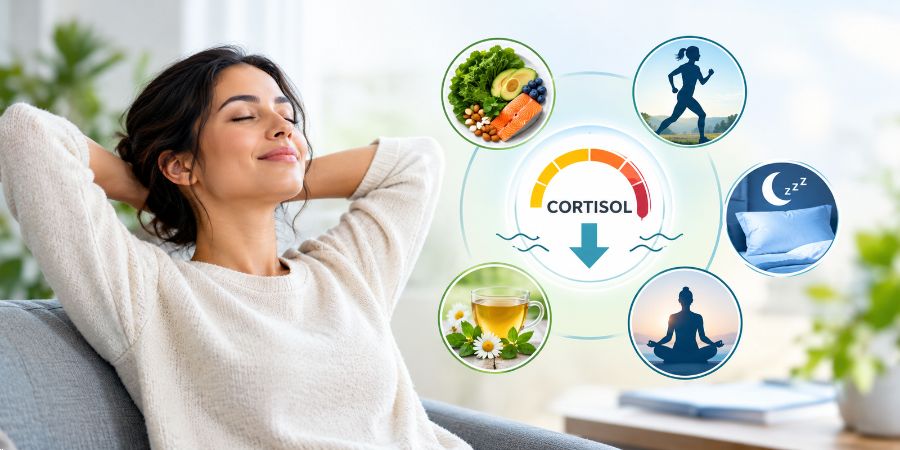
Start with the methods that have the most support: a stress management practice you will keep, moderate exercise most weeks, and a steady sleep schedule. Treat supplements as optional and uncertain. If symptoms point to a medical cause, get tested instead of guessing.
Author’s Note:
Having experienced prolonged stress myself, I have come to understand how easily we can overlook what our body and mind are trying to tell us. There are times when we keep meeting deadlines, fulfilling responsibilities and showing up for the people who depend on us, even when we feel exhausted inside. We often convince ourselves that we will rest once everything settles down, but life rarely follows a convenient schedule.
What I have learned is that looking after yourself cannot always wait until you have finished everything else. Getting enough sleep, stepping away from work, spending time doing something you enjoy and allowing yourself to slow down may seem like small decisions, yet they can make a meaningful difference to how you feel. I also believe we need to be more careful about attributing every physical or emotional struggle to cortisol. Understanding our bodies matters, but so does seeking professional advice when something does not feel right.
For me, the most important lesson is that managing stress is not about achieving a perfectly calm life. It is about recognising when the pressure has become too much and giving yourself permission to respond to it. We do not have to wait until we reach exhaustion to start taking care of ourselves.
This article is for general information and does not replace medical advice.