
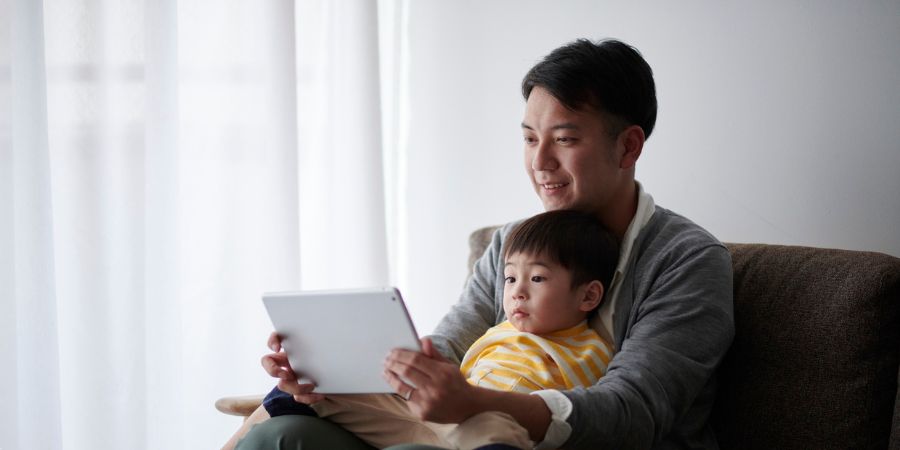
Children today are growing up staring at screens from the age of two. Tablets at breakfast. Phones after school. Laptops for homework. And the eyes, still developing, still adjusting, are absorbing all of it.
Below is what the science already shows:
How Does Screen Time Affect Children’s Eye Health?
Prolonged screen time in children is strongly associated with increased risk of myopia (nearsightedness), digital eye strain, dry eyes, and disrupted sleep. The risk grows with daily screen exposure beyond one hour, according to a 2025 meta-analysis published in JAMA Network Open covering 45 studies and more than 335,000 children.
Researchers found that an additional hour of daily screen time was associated with higher odds of myopia. There were higher odds of myopia as screen time increased from one hour daily up to four hours, at which point the risk becomes extreme.
The mechanism is not the screen itself. When the eye focuses on objects at close range for extended periods, it receives signals that may promote axial elongation, the physical lengthening of the eyeball that defines myopia. Once the eyeball elongates, the change is permanent.
What is Digital Eye Strain in Children and What Are the Symptoms?
Digital eye strain or computer vision syndrome refers to eye and visual problems resulting from continued screen work. The signs of screen eye fatigue in children are eye tiredness headaches blurry vision, dry or teary eyes, and trouble concentrating after using the screen. Although digital eye strain is not a permanent condition, it is a sign from the organism that the eyes are getting too much work.
Digital eye strain is not a single eye condition, like glaucoma or pink eye. It is a cluster of symptoms that typically resolve when screen use is reduced or managed correctly. The problem is that most children and parents normalise it rather than addressing it.
Common symptoms to watch for:
- Frequent eye rubbing during or after screen use
- Complaints of blurry or double vision
- Headaches after schoolwork or video games
- Squinting at the screen
- Sensitivity to light
- Trouble sleeping at night
How Much Screen Time is Too Much for Children’s Eyes?
The WHO recommends no screen time for children under 1, very limited exposure between ages 1 and 3, and no more than one hour per day for children aged 3 to 5. For school-age children, no universal daily limit has been established by ophthalmology bodies, but research clearly shows that beyond one hour of daily screen time, myopia risk begins to rise.
The American Academy of Ophthalmology does not have specific recommendations for amount of screen time for children. But parents should be aware of the possible effects of screen use on children’s eyes, as well as the broader health concerns raised by other groups like the WHO.
Research from Canada has found that preschoolers who had more than two hours of screen time per day had a nearly eight-fold increase in ADHD. Eye health is one part of a much larger picture.
|
Age Group |
WHO Recommendation |
AAP Recommendation |
|
Under 1 year |
No screen time |
No digital media except video calls |
|
1–2 years |
Very limited |
Avoid, except video chatting |
|
2–5 years |
Max 1 hour/day |
High-quality educational content only |
|
6 years and older |
Consistent limits |
Balanced with sleep, activity, and learning |
Is Myopia in Children Increasing Because of Screens?
Yes, childhood myopia rates is becoming increasingly prevalent across the world, and increased screen time is considered one of the major factors. Also, when kids are less often seen doing outdoor activities this factor is greatly multiplied. 40 out of 100 of the United States children of 6-19 years of age are now myopic while in the next 8 years, it’s estimated that 50 of 100 human beings will be suffering from shortsightedness.
Home confinement and distance learning during the pandemic drove children’s average daily screen time from approximately 2.1 hours to 5.6 hours per day, according to Contemporary Pediatrics’ April 2026 comprehensive review. Myopia rates accelerated significantly during this period.
In Europe, 47.2% of 20-year-olds now have myopia, compared to only 13.9% in the 1960s, according to the European Journal of Public Health. That is a near-fourfold increase in six decades, driven by lifestyle changes, particularly increased near-work and reduced outdoor exposure.
Global smartphone penetration surged from 21.6% in 2014 to 69.0% in 2023. Additionally, the age at which children begin using smart devices is decreasing, with many two-year-olds spending up to two hours daily on such devices.
In Asia, the numbers are even more striking. Up to 90% of teenagers and adults in Asia are nearsighted, a dramatic increase over recent generations.
Does Outdoor Time Actually Protect Children’s Eyes?
Yes. Outdoor time is, by all accounts, one of the most reliable interventions for the reduction of myopia risk in children. Scientific evidence points to that it helps a great deal when kids are outside for at least two hours every day to not only reduce myopia but to slow it down as a progressing condition whether kids are exposed to screens indoors or not.
A research project from the year 2019 and published in the American Academy of Ophthalmology journal Ophthalmology revealed that time spent outdoors, most of all during the early childhood years, can greatly assist in slowing down myopic progression. Studies indicate that spending at least two hours a day outside can be an effective approach to preventing or slowing the onset of myopia.
Exposure to natural light triggers the release of dopamine in the retina, an activity which is supposed to result in slowing the retinal axis elongation that is responsible for myopia formation. Simply put, it’s not about giving the eyes a break but rather a physiological advantage of outdoor lighting something that cannot be imitated with lighting indoors that outdoor light brings.
What is the 20-20-20 Rule for Children’s Eye Health?
The 20-20-20 rule is the most widely recommended guideline for reducing digital eye strain in children and adults. Every 20 minutes of screen time, look at something 20 feet away for at least 20 seconds. This gives the eye muscles a rest and reduces cumulative strain from sustained near-focus work.
Eyes focus using tiny muscles. Looking away from the screen every 20 to 30 minutes helps give those muscles a rest. Brightness and contrast adjustments can also reduce strain, the goal is to make text stand out clearly from the background and match the screen’s light to surrounding room light.
Additional practical steps for parents:
- Position screens at least 20 inches from the child’s eyes
- Reduce screen brightness in low-light environments
- Enable night mode or blue light filters in the evening
- Encourage regular blinking, children blink significantly less when focused on screens
- Schedule outdoor play as a daily non-negotiable
Can Blue Light from Screens Permanently Damage Children’s Eyes?
Current evidence does not confirm that blue light from screens causes permanent eye damage in children. However, blue light in the evening suppresses melatonin production, disrupting sleep, which has wide-ranging effects on child development, attention, and mood. Blue light filtering glasses and screen settings can reduce this effect but are not a substitute for limiting screen time before bed.
The concern about blue light causing retinal damage is largely theoretical at normal screen exposure levels. The more clinically significant issue remains near-work duration and its association with myopia, not blue light specifically.
FAQs: Screen Time and Children’s Eye Health
Does screen time cause permanent eye damage in children?
Prolonged screen time is associated with myopia, a permanent structural change in the eye, but digital eye strain itself is not permanent. Once myopia develops, the degree of nearsightedness can worsen over time, which is why early prevention matters more than treatment.
At what age should children start using screens?
WHO recommends no screen time before age one, and no more than one hour per day for children aged three to five. For school-age children, limits should be consistent and balanced with outdoor time, sleep, and physical activity.
How much outdoor time do children need to protect their eyes?
Research recommends at least two hours per day of outdoor time to reduce myopia risk. Natural light exposure, not simply distance viewing, is the active protective factor.
Are blue light glasses worth it for children?
Blue light glasses may help reduce sleep disruption if used in the evening. They have not been shown to prevent myopia or permanently protect eye health. Reducing screen time, especially before bed, is more effective than glasses alone.
What are the signs that a child may need an eye test?
Squinting at the board at school, sitting closer to the TV than usual, frequent headaches, eye rubbing, and complaints of blurry vision are all reasons to schedule a paediatric eye examination.