

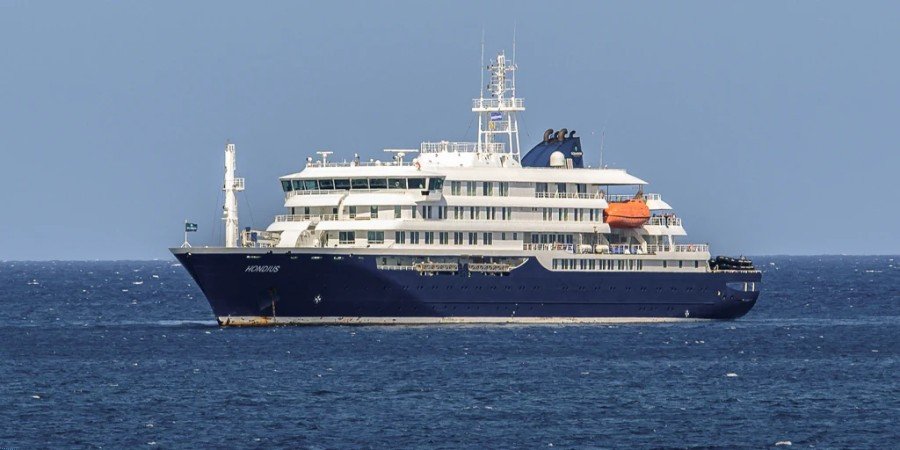
Three people are dead. One is in intensive care in Johannesburg. A British passenger has tested positive. And right now, a cruise ship carrying 170 passengers and 71 crew is sitting anchored off Cape Verde, with people still on board who cannot disembark.
This is the hantavirus outbreak cruise ship story nobody expected to write in 2026.
Here are the 5 fast facts:
- The ship: MV Hondius, operated by Oceanwide Expeditions, Dutch-flagged
- 3 passengers dead, 1 confirmed hantavirus case, 5 additional suspected cases
- The ship traveled from Ushuaia, Argentina, where the Andes virus is endemic
- WHO declared it a public health event on May 3, 2026
- Cape Verde authorities, as of Sunday evening, had not authorized disembarkation
What Happened on the MV Hondius? Full Timeline
The MV Hondius left Ushuaia in Argentina roughly seven weeks ago. It made stops in Antarctica and the British overseas territory of Saint Helena before anchoring in Praia, the capital of Cape Verde.
Here is the clearest sequence of events available right now:
| Date / Stage | What Happened |
| ~7 weeks ago | MV Hondius departs Ushuaia, Argentina |
| En route | First passenger (70-year-old man) develops symptoms |
| Saint Helena stop | 70-year-old man declared dead on arrival |
| En route to Ascension Island | UK passenger becomes ill, evacuated to South Africa |
| Johannesburg | 69-year-old Dutch woman dies at Johannesburg hospital |
| South Africa lab | UK passenger tests positive for hantavirus |
| May 3, 2026 | WHO officially notified; Cape Verde authorities board ship |
| May 3, 2026 evening | Cape Verde still refuses disembarkation as of 11 PM CET |
Two of the people who died were identified as a married Dutch couple, a 70-year-old man declared dead in St. Helena, and a 69-year-old woman who collapsed at Johannesburg’s international airport while attempting to fly home to the Netherlands.
Two crew members on board also require urgent medical care, the company confirmed.
What is Hantavirus? Symptoms, Severity, and Death Rate
Hantavirus is not new. Most people heard the name in early 2025 when it was linked to the death of Betsy Arakawa, wife of actor Gene Hackman, at their New Mexico home.
But a hantavirus outbreak on a cruise ship? That is extremely rare, and that is exactly why this case has alarmed experts worldwide.
What is hantavirus, exactly?
Hantavirus is a family of RNA viruses carried by infected rodents, primarily rats, mice, and deer mice. Humans pick it up through contact with rodent urine, saliva, feces, or contaminated dust. It does not spread like the flu. You do not catch it from a cough or a handshake, with one major exception (more on that below).
Hantavirus pulmonary syndrome (HPS) symptoms, in order:
- Stage 1 (Days 1-5): Fatigue, fever, muscle aches, headaches, dizziness, chills
- Stage 2 (Days 5-10): Shortness of breath, coughing, tightness in the chest, fluid building in the lungs.
- Stage 3: Rapid respiratory failure, this is where the danger spikes
There is no cure for hantavirus infection beyond treatment of symptoms. Patients with severe breathing difficulties may need to be intubated, according to the CDC. Early hospital care is the only real lever available right now.
How deadly is hantavirus pulmonary syndrome?
The CDC puts the case fatality rate for HPS at over 35%. For context, seasonal flu kills roughly 0.1% of cases. This is not in the same category.
Why is Hantavirus on a Cruise Ship? The Two Theories Experts Are Discussing
Scott Miscovich, family physician and President and CEO of Premier Medical Group, said it is highly unusual for there to be a hantavirus outbreak on a ship. When he first heard the news, he thought it was a misprint.
He outlined two plausible explanations:
Theory 1: Rodent contamination on board The ship could have picked up rats or mice during its time in Ushuaia, Argentina. Contaminated feces or urine in a cabin, storage area, or ventilation system could have exposed passengers without anyone realizing it.
Theory 2: Andes virus, human-to-human transmission Just one type of hantavirus, the Andes virus, is known to be able to transmit from person to person, though it is rare. It is primarily found in Chile and Argentina, where the ship originated.
This is the detail that has global health officials paying close attention. If it turns out to be Andes virus spreading person-to-person on a vessel, it changes how expedition travel is assessed from a biosecurity standpoint.
The WHO stated: “Hantavirus infections are typically linked to environmental exposure to infected rodents’ urine or faeces. While rare, hantavirus may spread between people, and can lead to severe respiratory illness and requires careful patient monitoring, support and response.” (Source: RTÉ)
Virus sequencing is ongoing. The results will tell us which theory is correct.
WHO Response and Current Status (May 4, 2026)
To date, one case of hantavirus infection has been laboratory confirmed, and there are five additional suspected cases. Of the six affected individuals, three have died and one is currently in intensive care in South Africa.
Here is where things stand right now:
- WHO has notified global health authorities under International Health Regulations.
- WHO Director-General Tedros is facilitating medical evacuation for two symptomatic passengers still on board.
- Cape Verde local health officials boarded the ship but have not authorized patients to disembark.
- Dutch authorities are working to coordinate repatriation for affected passengers back to the Netherlands.
- Oceanwide Expeditions stated its priority is ensuring symptomatic individuals receive “adequate and expedited medical care.”
- Virus sequencing is ongoing, the exact strain has not yet been confirmed.
The ship remains anchored off Praia as of this writing.
Is Hantavirus Contagious Person to Person?
This is the question driving most searches right now, and it deserves a clear answer.
Standard hantavirus strains: No. The Sin Nombre virus (common in the US), Seoul virus, and most other strains do not spread between people. You need direct rodent exposure.
Andes virus: Limited yes: The Andes virus, found in southern Argentina and Chile, exactly where the MV Hondius originated, has documented cases of person-to-person spread. It is rare, but it is real. This is the only known hantavirus strain with this capability.
So the critical question for investigators is: which strain is circulating on the MV Hondius? That answer changes the entire risk profile for the remaining 230+ people on board.
What does this Means for Cruise Travelers?
If you are currently planning a cruise or just returned from one, here is the practical picture:
This is not a standard cruise ship risk: Norovirus, COVID-19, and Legionnaires’ disease are the viruses historically associated with cruise outbreaks. Hantavirus is essentially unheard of on cruise ships, for one simple reason: mainstream cruise routes do not pass through hantavirus-endemic regions.
Expedition cruises carry different risks: The MV Hondius is an expedition vessel, the kind that takes passengers to remote, off-grid locations. Antarctica, remote Atlantic islands, and ports in southern Argentina all sit in regions where hantavirus exposure is a known environmental risk.
What to watch for if you recently sailed through South America or Antarctica:
- Unexplained fatigue or fever starting 1-5 weeks after the trip
- Rapid shortness of breath that does not respond to rest
- Muscle aches combined with breathing difficulty
These warrant urgent medical attention and you should mention potential hantavirus exposure to your doctor.
No current CDC or WHO travel advisory has been issued for mainstream cruise travel. This outbreak is specific to expedition-style routes through endemic areas.
FAQ: Hantavirus Cruise Ship
How did hantavirus get on the MV Hondius cruise ship? The exact route is still under investigation. Rodent contamination on board or a passenger infected with the Andes strain in Argentina are the two leading theories. Virus sequencing will confirm which.
Is hantavirus contagious person to person? Most hantavirus strains are not. The Andes virus, found in Argentina where this ship departed, is the one exception, with limited documented human-to-human spread.
What is the hantavirus pulmonary syndrome death rate? The CDC estimates over 35% of people who develop respiratory symptoms from HPS will die. Early intensive care treatment is the main way to improve survival odds.
What are hantavirus symptoms? Early: fever, fatigue, muscle aches, chills, headache. Later: shortness of breath, cough, chest tightness, fluid in the lungs. Symptoms typically appear 1-5 weeks after exposure.
MV Hondius Cape Verde, what is the current update? As of May 4, 2026, the ship is anchored off Praia, Cape Verde. Cape Verdean authorities have visited the ship but have not authorized disembarkation. The WHO is coordinating evacuations for symptomatic passengers.
Key Takeaways
- 3 dead, 1 confirmed hantavirus case, 5 suspected cases aboard the MV Hondius cruise ship.
- The ship traveled from Ushuaia, Argentina, the home region of the Andes virus.
- Hantavirus pulmonary syndrome kills over 35% of patients who develop respiratory symptoms.
- Andes virus is the only known hantavirus strain with person-to-person transmission capability.
- WHO has notified global health authorities; virus sequencing is still ongoing.
- Mainstream cruise travelers face no elevated risk, this outbreak is tied to expedition-style routes.