
For decades, coffee received a bad reputation. Doctors used to warn that drinking too much of it would spike your blood pressure, stress your heart, and leave you an anxious wreck. But if you are the kind of person who regularly reaches for a fifth cup before noon, you can breathe a little easier: the modern medical consensus has shifted a bit.
So, is consuming 5 cups of coffee everyday bad?
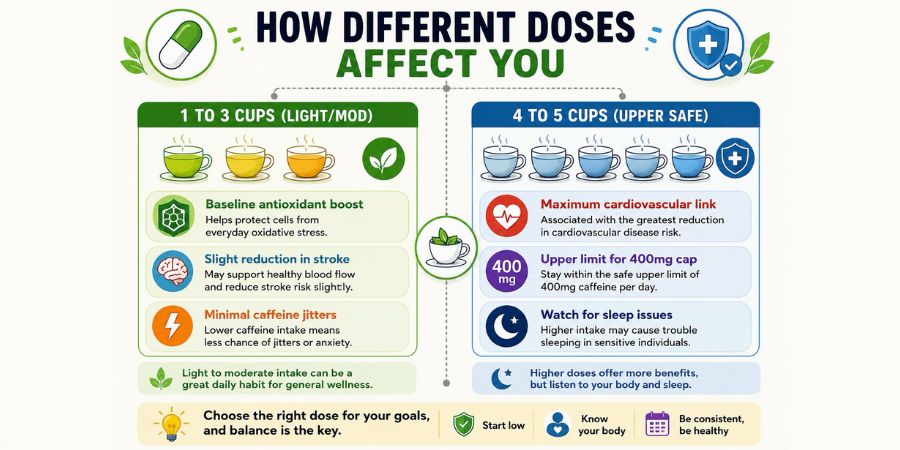
For most healthy adults, no. Drinking up to 5 standard cups of coffee a day (which comes out to roughly 400 milligrams of caffeine) is generally safe. In fact, major research, including guidance from the American Heart Association, shows that moderate to high daily coffee intake is actually linked to a lower risk of heart failure, stroke, and overall mortality.
That said, there is a big difference between 5 mugs of plain drip coffee and 5 venti sugary lattes. How those 5 cups affect you personally depends heavily on your genetics, how you brew it, and what else you put in your mug.
What Science Says About Coffee and Heart Disease
When researchers first started looking into coffee heart disease risks, they assumed caffeine’s temporary boost to heart rate and blood pressure would lead to long-term heart damage.
However, long-term studies following hundreds of thousands of people over decades proved otherwise. Coffee is not just liquid caffeine; it is packed with antioxidants and polyphenols.
These plant compounds help reduce internal inflammation and protect your blood vessels from the kind of cellular damage that causes arterial plaque.
The key takeaway? Regular coffee consumption is not something most people need to fear. In fact, research consistently shows that people who drink 2 to 4 cups a day have lower rates of heart failure than non-coffee drinkers, and pushed up to 5 cups, the protective benefits usually hold steady.
5 Cups a Day: The Good, The Bad, and The Complicated
Hit 5 cups by early afternoon and you hit roughly 400 mg of caffeine. That is right at the top of the FDA recommended ceiling for adults.
The Upside
First off, your heart might actually benefit. Long-running health studies keep finding that daily coffee drinkers run a lower overall risk of heart failure and stroke.
It helps your metabolic system, too. Plant chemicals like chlorogenic acid sharpen how your body handles blood sugar spikes, cutting down your odds of developing type 2 diabetes over time.
Then there is your liver. Coffee drinkers consistently turn up cleaner liver enzyme panels and show far lower rates of fatty liver disease.
Where Things Can Go Wrong
That said, 5 cups can definitely backfire if your body clears caffeine at a crawl.
Too much caffeine hits the gut and nervous system first. Cross your personal limit and you are looking at heartburn, shaky hands, a racing pulse, or lying awake at 2 AM staring at the ceiling.
4 Things That Change How 5 Cups of Coffee Affects Your Body
Not all 5-cup habits are created equal. Four major factors decide whether your daily routine helps your body or hurts it:
1. Paper Filter vs. French Press
Coffee beans contain natural oils called diterpenes (specifically cafestol and kahweol). If you drink unfiltered coffee, like French press, espresso, or Turkish brew, these oils end up in your cup and can raise your LDL (“bad”) cholesterol over time. Using a standard paper filter traps these oils while letting the healthy antioxidants pass right through.
2. Your Genetics
Your liver uses an enzyme encoded by the CYP1A2 gene to break down caffeine. “Fast metabolizers” clear caffeine out of their system in a couple of hours and rarely feel jittery. “Slow metabolizers” process it much slower, meaning 5 cups can leave caffeine circulating in their blood for 12 hours or more, raising their risk of high blood pressure and sleep trouble.
3. What You Put in the Cup
The health perks linked to coffee consumption come from the coffee itself, not the vanilla syrup, heavy cream, or whipped toppings. If every cup comes loaded with sugar and saturated fat, the extra calories and metabolic strain will quickly cancel out the cardiovascular benefits.
4. Your Sleep Schedule
Caffeine has a half-life of about 5 to 6 hours. If you drink your fifth cup at 4 PM, half of that caffeine is still buzzing in your brain at 10 PM. Even if you manage to fall asleep, residual caffeine ruins your deep sleep cycles. Since poor sleep directly harms heart health, late-day caffeine can indirectly create the very heart problems you are trying to avoid.
Who Should Keep it Under 3 Cups?
Even though 5 cups is safe for the general public, a few groups should definitely cut back:
If you have severe, unmanaged high blood pressure, go easy. Daily drinkers build up tolerance to caffeine-induced blood pressure spikes, sure, but if your numbers are already dangerously high, adding heavy caffeine doses is just asking for trouble.
Anyone dealing with chronic anxiety or GERD should be careful, too. Heavy caffeine doses kick up panic responses and physically relax your esophageal sphincter, making acid reflux feel ten times worse.
Pregnant or nursing mothers should also cut back, medical guidelines advise capping caffeine at 200 mg per day (around 2 cups) to avoid developmental risks.
Simple Ways to Keep Your Daily Coffee Habit Healthy
Love having 5 cups a day? A few small tweaks keep the habit working for you instead of against you.
- Stick to paper filters. Brew drip or pour-over so you do not accidentally bump up your bad cholesterol.
- Cut off caffeine early. Set a firm rule to stop drinking at least eight hours before bedtime.
- Keep the additives minimal. Black is great, but if you need milk, go with a splash of low-fat or plant-based options without dumping in sugar.
- Pay attention to your body. Feel wired, jumpy, or anxious on 5 cups? Scale it back to three. You will still get plenty of antioxidants without sending your nervous system into overdrive.