
Mpox hasn’t really gone away. As of March 2026, the CDC is still watching active outbreaks across Central and Eastern Africa, new clusters showing up in Western Europe, and confirmed cases that are being reported inside the United States.
Most people, honestly, aren’t at high risk, but the whole situation is shifting, and some individuals really should take action right now especially if they are traveling or if they have specific risk factors.
Here is everything you need to know, from the basics to the current numbers.
Highlights
- 15 clade I mpox cases confirmed in the US between November 2024 and March 2026.
- 53,000+ cases of clade I mpox reported in Central and Eastern Africa.
- 100,000+ cases of clade II mpox across 122 countries globally.
- Clade Ib is now spreading in Western Europe, including among people with no travel history.
- A 2-dose vaccine is available and recommended for eligible people in the US.
Key Facts at a Glance
|
Detail |
Data |
|
US clade I cases (Nov 2024–Mar 2026) |
15 confirmed cases |
|
Global clade I cases (Africa) |
53,000+ |
|
Global clade II cases |
100,000+ across 122 countries |
|
Clade Ib fatality rate |
Less than 0.5% |
|
Clade Ia fatality rate |
About 2.5% |
|
Vaccine available |
Yes – 2-dose mpox vaccine |
|
Current US risk level |
Low for most people |
Overview: What is Happening With Mpox Right Now?
Mpox, previously called monkeypox, is a viral disease caused by the monkeypox virus. It can spread between people or between people and certain animals.
There are two types of the virus: clade I and clade II. Both can be spread, treated, and prevented in the same ways. Think of them as two branches of the same family, similar enough to handle the same way, but different enough to behave differently in terms of severity.
The world is currently dealing with two separate but overlapping situations:
Situation 1: Clade I in Africa and beyond: There have been more than 53,000 cases of clade I mpox related to the outbreak in Central and Eastern Africa. Travel-associated clade I cases have also appeared across the globe, including recent outbreaks in Western European countries.
Situation 2: Clade II ongoing globally: The ongoing global outbreak of clade IIb has caused more than 100,000 cases in 122 total countries, including 115 countries where mpox was not previously reported. This is the strain that caused the major 2022 global outbreak. It is still circulating, just at lower levels.
What is the Current Mpox Situation in the United States?
The risk posed by the clade I mpox outbreak to most people within the United States remains low.
That said, cases have been confirmed here.
From November 2024 to February 2026, there were 11 reported cases of clade I mpox in the United States. In March 2026, there were an additional 4 reported cases. These cases are not linked.
So where did these people get it?
All 15 US cases were diagnosed in people who had recently traveled to areas associated with the outbreak in Central and Eastern Africa, had recently traveled to parts of Western Europe where newer outbreaks are being reported, or were linked to people who had traveled from these areas.
One notable detail: three clade I mpox cases were reported in October 2025 in people with no recent travel. Viral genomic data indicate these 3 cases were linked to a different US case reported in August 2025 following travel to an area with a known clade I outbreak. That is a small but important data point, it shows the virus can spread domestically once it arrives.
Clade II in the US: Clade II mpox is still circulating at low levels. A summer 2025 uptick of US cases of clade II occurred across several different states, some of which were linked to outbreaks in West Africa, including Ghana and Liberia.
What is Happening With Mpox Around the World?
The global picture is more complex than the US situation.
Clade I in Africa
Clade I has two subclades, clade Ia and clade Ib. Based on what we know from recent outbreaks, clade Ib has a lower case-fatality rate (less than 0.5%) than clade Ia (about 2.5%).
How is it spreading?
- Clade Ia: In Central Africa, people have gotten subclade Ia through contact with infected dead or live wild animals, household transmission, or patient care.
- Clade Ib: Subclade Ib is a more recently discovered strain identified in the eastern part of the Democratic Republic of the Congo. Clade I mpox is mostly spread initially through intimate or sexual contact, followed by spread within households.
The Western Europe Development
This is the newer concern. Beginning in Fall 2025, several countries in Western Europe began reporting clade Ib mpox cases among individuals who had no documented history of international travel. These cases were likely related to sexual exposure.
It means the virus is no longer just arriving with travelers, it is establishing local spread in high-income countries.
Since January 2024, there have been more than 200 clade Ib cases in high-income countries, and no deaths have been reported.
How Quickly is it Spreading Globally?
The CDC flagged something important in their March 2026 update: of 33 exported clade Ib mpox cases from January to March 2026, only 8 originated in Central or Eastern Africa. That means most exported cases are now coming from other regions, a sign that global transmission dynamics have genuinely shifted.
What Are the Two Types of Mpox and How Are They Different?
|
Feature |
Clade Ia |
Clade Ib |
Clade II |
|
Origin |
Central Africa |
Eastern DRC |
West Africa / Global |
|
Fatality rate |
~2.5% |
Less than 0.5% |
Lower than clade I |
|
Main spread |
Animal contact, household |
Sexual/intimate contact, household |
Sexual contact, close contact |
|
In the US? |
Yes (travel-linked) |
Yes (travel-linked + some domestic) |
Yes (low-level circulation) |
|
In Europe? |
Yes |
Yes (including no-travel cases) |
Yes |
How Does Mpox Spread?
Mpox does not spread as easily as flu or COVID. It needs closer contact.
Primary routes of transmission:
- Intimate or sexual contact the dominant mode for clade Ib
- Direct contact with mpox skin lesions, rashes, or bodily fluids
- Contact with contaminated materials: bedding, clothing, towels used by someone with mpox.
- Respiratory droplets only during prolonged, close face-to-face contact.
- Animal-to-human contact handling infected animals (more relevant in Africa for clade Ia).
- Household transmission living closely with someone who has mpox.
A limited number of cases early in the outbreaks were diagnosed in healthcare workers who did not have access to personal protective equipment. That is a reminder that healthcare settings carry risk when proper precautions are not in place.
Who is Most at Risk of Getting Mpox?
Most people in the US face low risk. But certain groups should pay closer attention:
- People traveling to Central or Eastern Africa
- People traveling to parts of Western Europe with active clade Ib outbreaks
- People with multiple sexual partners, particularly in affected networks
- Healthcare workers treating mpox patients without proper PPE
- People in close household contact with a confirmed mpox case
Can You Get Vaccinated Against Mpox?
Yes, and the CDC says vaccination is one of the most important tools available.
Vaccination is an important tool in stopping the spread of mpox. If you have certain risk factors that make you eligible, you can help protect yourself by getting the 2-dose mpox vaccine.
The vaccine used in the US is JYNNEOS (also called Imvamune or Imvanex). It is approved by the FDA and given as two doses, typically 28 days apart. It works against both clade I and clade II.
Who should consider getting vaccinated:
- People with recent exposure to someone with mpox
- People with multiple or anonymous sexual partners
- Travelers to areas with active clade I outbreaks
- Healthcare workers in high-exposure settings
If you are unsure whether you qualify, your local health department or healthcare provider can advise you directly.
What are the Symptoms of Mpox?
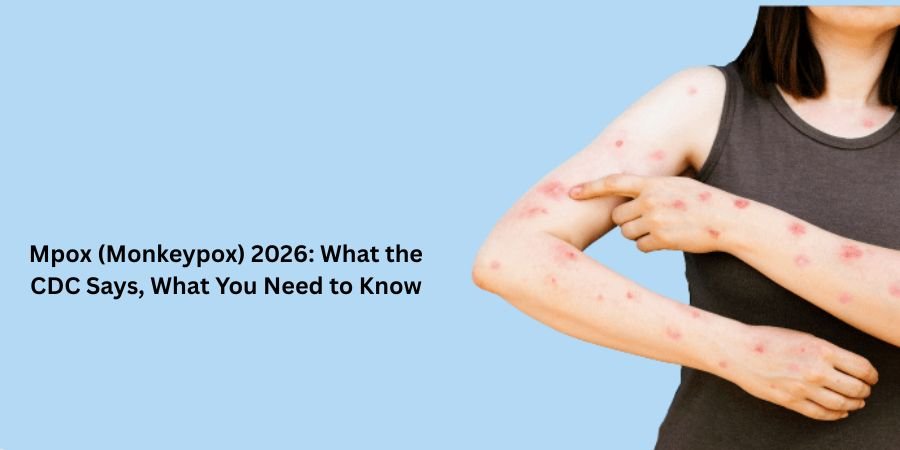
Mpox typically starts with flu-like symptoms and then develops a distinctive rash.
Early symptoms (first 1-4 days):
- Fever
- Headache
- Muscle aches
- Swollen lymph nodes
- Exhaustion
Rash stage:
- Begins on the face, then spreads to other body parts
- Goes through stages: flat spots → raised bumps → blisters → scabs
- Can also appear on genitals, hands, feet, chest, or near the mouth
- Rash can be painful
Symptoms usually last 2-4 weeks. Most people recover without hospital treatment, but the illness can be serious for people who are immunocompromised, pregnant, or very young.
What is the CDC Doing About Mpox?
The CDC is active on multiple fronts.
In Africa: CDC trained 80 field epidemiologists in the DRC and continues to provide key support for many who are still working in priority health zones. These epidemiologists play a key role in detecting cases, tracing and monitoring contacts, and increasing community awareness of mpox, while also collecting and sending specimens to labs for testing and training healthcare workers to do the same.
In the United States: CDC works closely with state, tribal, local, and territorial public health departments to provide recommendations for clinical management, diagnosis, and prevention of mpox cases in the US. CDC continually increases capacity in communities across the United States for early detection of mpox through existing surveillance systems, including wastewater testing.
Wastewater surveillance is particularly useful, it can detect viral presence in a community before clinical cases are formally reported.
Should You Be Worried If You Are Not Traveling?
For most Americans who are not traveling to affected regions and are not in high-risk contact networks, the current risk is genuinely low.
The 15 US cases confirmed over a 16-month period reflect a contained situation, not a widespread domestic outbreak. The CDC is monitoring it closely, and there are no signs of widespread community transmission in the US at this time.
That said, the Western Europe situation is worth watching. The CDC expects additional cases in Europe and the United States. That is not a prediction of an outbreak, it is a realistic acknowledgment that travel and networks connect the world.
Frequently Asked Questions
What is mpox and is it the same as monkeypox? Yes. The WHO officially renamed monkeypox to “mpox” in 2022. The disease and the virus are the same. The name change was made to reduce stigma and align with best practices for disease naming.
How many mpox cases are there in the US right now? As of March 2026, there have been 15 confirmed clade I mpox cases in the United States since November 2024. Clade II cases continue to circulate at low levels.
Is mpox deadly? It can be, but most healthy adults recover. Clade Ib has a case-fatality rate of less than 0.5%, while clade Ia has a fatality rate of about 2.5%. Severe cases are more common in immunocompromised individuals, young children, and pregnant people.
Can mpox spread through casual contact like shaking hands? Mpox is not easily spread through brief casual contact. It requires closer, more sustained contact, particularly skin-to-skin contact, intimate contact, or prolonged exposure to respiratory droplets.
Is there a treatment for mpox? There is no mpox-specific antiviral licensed in all countries, but tecovirimat (TPOXX) has been used under expanded access protocols in the US and elsewhere. Supportive care, managing pain, preventing secondary infections, is the main approach for most patients.
Do I need the mpox vaccine if I am not traveling? Not necessarily. Vaccination is recommended for people with specific risk factors. If you are not in a high-risk group and not traveling to affected areas, you do not currently need it. Talk to your doctor if you are unsure.
Can pets spread mpox to humans? It is possible but rare. Animals can carry the monkeypox virus. In household settings, the main risk is from infected humans to pets, not the other way around. The CDC has guidance for veterinarians on managing this risk.
What should I do if I think I have mpox? Isolate yourself from others, avoid skin contact, and contact your healthcare provider or local health department immediately. Do not go to an emergency room without calling ahead, you will need to inform them about your potential exposure so they can take appropriate precautions.