
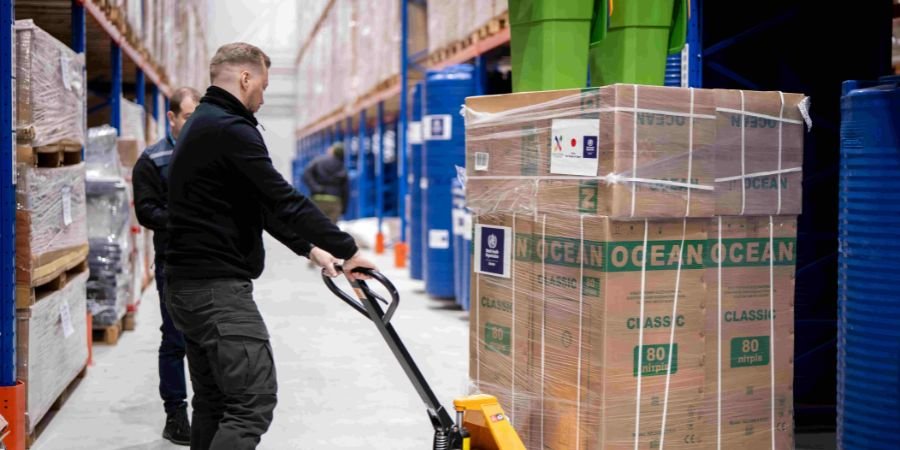
Ukraine’s hospitals have been running under enormous strain since the war began. High patient loads, damaged infrastructure, and disrupted utility services have made delivering basic care genuinely difficult. On 26 May 2026, the World Health Organization (WHO), the Asia-Europe Foundation (ASEF), and the Government of Japan responded with a direct, practical delivery of equipment to frontline hospitals.
This was not symbolic aid equipment, and industrial laundry systems, the kind of infrastructure that keeps a hospital running safely when the grid goes down.
What Equipment Was Delivered and to Which Hospitals?
WHO, together with ASEF and the Government of Japan, provided water heaters, water storage tanks, and equipment for the safe management of hazardous medical waste to 24 hospitals in Ukraine’s frontline regions. Five hospitals also received modern laundry and drying equipment.
The delivery reached hospitals across four regions of Ukraine, including Mykolayiv, a frontline oblast where one key hospital serves the entire community, from older patients to newborns, and includes a maternity unit.
Equipment delivered:
|
Equipment Type |
Purpose |
|
Water heaters |
Hot water supply during utility disruptions |
|
Water storage tanks |
Backup water access for clinical use |
|
Hazardous medical waste management systems |
Safe disposal of infectious and surgical waste |
|
Barrier washers, dryers, ironing systems |
Sterile laundry for surgical and patient care |
Why Does This Equipment Matter for Hospital Safety?
Basic as it sounds, clean water and sterile linen are non-negotiable in a hospital. Without them, infection spreads. Surgeries become dangerous. Patient outcomes deteriorate fast.
The delivery will help in meeting hygiene standards, support instrument sterilization, help with infection prevention, and allow safe handling of medical procedures, well basically. It will also allow hospitals to keep running even during long disruptions in utility services, you know, the power and water kind of things.
In Mykolayiv specifically, the outdated equipment has now been replaced with modern barrier washers, dryers, and ironing systems. The impact was immediate. “For us, everything has changed,” said Liudmyla Pushkaruk, a laundry worker at the hospital. “Our work is now faster, safer and of much higher quality.”
How Many Patients Do These Hospitals Treat?
The scale of need is significant. In 2025 alone, doctors in Ukraine treated more than 10,000 patients, including 2,000 who required surgery.
Surgical care demands the highest hygiene standards. Every instrument must be sterilized. Every surface must be clean. Every piece of linen must be safely laundered. That is exactly what this equipment supports.
Who Funded and Organized This Effort?
This was a three-party collaboration:
- WHO coordinated the delivery and on-the-ground implementation through its Ukraine Country Office.
- Asia-Europe Foundation (ASEF) provided funding and institutional support.
- The Government of Japan co-funded the initiative.
Ambassador Beata Stoczyńska, Executive Director of ASEF, said: “Access to water, sanitation and hygiene is fundamental to health security and the uninterrupted functioning of hospitals, especially in frontline regions.”
What is WHO’s Broader Role in Ukraine’s Health System?
This support is part of WHO ongoing effort to help strengthen the resilience of Ukraine health system during the war , especially in those frontline zones that are hardest hit. Hospitals across Ukraine still have to work under immense pressure, with high patient loads, and at the same time the ongoing infrastructure challenges keep weighing on everyone.
The goal is straightforward: keep hospitals functional so patients can keep receiving care, regardless of what is happening outside.
Key Takeaways
- 24 frontline hospitals received water and waste management equipment.
- 5 hospitals received modern laundry systems.
- Delivery covered 4 regions of Ukraine, including Mykolayiv.
- Support funded jointly by ASEF and Japan, delivered by WHO.
- Equipment directly enables hygiene compliance, sterilization, and infection prevention.
- In 2025, these hospitals treated over 10,000 patients, including 2,000 surgical cases.