
Highlights:
- The WHO and the Stop TB Partnership have released a toolkit focused on TB tests you can do right near the patient or with a swab, aiming to make it smoother for countries to start using these newer tests.
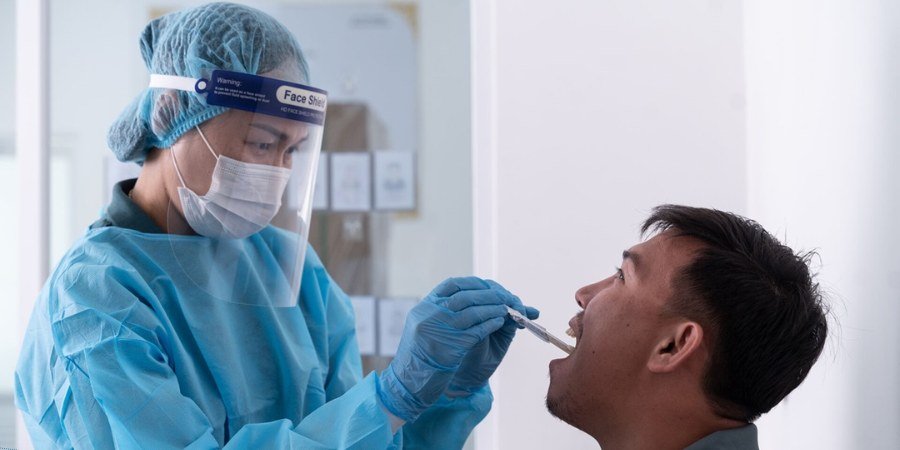
- This kit allows for doing quick TB tests. These tests check for the disease’s genetic material from spit or tongue samples. It means testing can happen right in local clinics and community spots.
- It includes practical rollout tools such as readiness checklists, training slides, SOPs, capacity calculators and monitoring sheets.
Key Facts:
|
Item |
What it means |
|
Main goal |
Help countries implement the TB near point-of-care and swab-based testing toolkit with less delay. |
|
Testing method |
Supports NPOC-NAATs for sputum swabs and tongue swabs. |
|
Who benefits |
Adults and adolescents who cannot produce sputum can still be tested through tongue swabs. |
|
Why it matters |
Faster TB diagnostic testing can reach more people earlier and support treatment sooner. |
Background:
The World Health Organization and the Stop TB Partnership have published a new TB near point-of-care and swab-based testing toolkit to help member countries put recent TB diagnostic guidance into practice. The toolkit is designed to make rollout easier for national programmes, local laboratories and care sites that want to expand TB diagnostic testing beyond centralized labs.
The toolkit focuses on near point-of-care nucleic acid amplification tests, or NPOC-NAATs, for sputum swabs and tongue swabs.
In simple terms, it gives health systems a more practical way to test for tuberculosis in places where people already go for care, including basic laboratories, primary health-care facilities and community settings. That matters because delay is often where TB control loses ground.
WHO had already recommended new diagnostic tools on 24 March 2026, saying near point-of-care tests can be battery powered, deliver results in less than one hour and cost less than many existing molecular diagnostics.
WHO also said tongue swabs can help adults and adolescents who cannot produce sputum, opening a testing path for people who would otherwise struggle to get diagnosed.
That is where the TB near point-of-care and swab-based testing toolkit becomes useful. It does not only explain the test itself. It gives countries the working pieces they need to use it well. The package includes readiness assessment checklists, training slides, competency tools, method verification guidance, specimen collection SOPs, capacity calculators and M&E spreadsheets.
The bigger point is simple. TB control depends on early diagnosis, and early diagnosis depends on systems that are easy to use at scale. By giving health programmes a ready-made rollout guide, the TB near point-of-care and swab-based testing toolkit aims to support faster, more consistent and more accessible TB diagnostic testing. WHO says the goal is evidence-based, quality-assured scale-up that can help countries move closer to global End TB targets.
Frequently Asked Questions
What is the TB near point-of-care and swab-based testing toolkit?
It is a WHO and Stop TB Partnership toolkit that helps countries implement newer TB tests, especially near point-of-care molecular tests and swab-based sample collection.
Why are tongue swabs important in TB diagnostic testing?
Tongue swabs give adults and adolescents who cannot produce sputum another way to be tested for TB, which widens access to diagnosis.
What does the toolkit include?
It includes readiness checklists, training materials, SOPs, a capacity calculator and monitoring tools for programme rollout.